1. Primary Applications and Uses
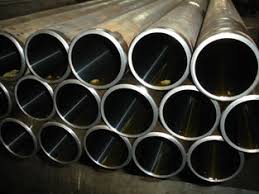
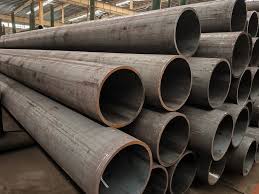
ASTM A335 P22 is a seamless ferritic alloy-steel pipe classified under the P22 grade. Its primary use is in high-temperature and high-pressure environments, making it a critical material in the following industries:
Sections of the boiler that heat steam to its final temperature.
Piping that carries high-pressure steam from the boiler to the turbine.
Pipes that collect and distribute steam within the boiler.
For transporting process fluids at elevated temperatures.
Within furnaces and process heaters.
Used in certain upstream and midstream applications where high-temperature resistance is required, such as in some surface facilities.
2. Key Advantages and Benefits
The widespread adoption of P22 is attributed to its well-balanced combination of material properties:
Excellent High-Temperature Strength: P22 offers superior compared to carbon steels, meaning it can withstand constant high stress at elevated temperatures (typically up to ~1050℃F / 565℃) without significant deformation over time. This is its most critical advantage.
2.25% Chromium provides significantly better resistance to oxidation (scaling) and sulfur corrosion than low-alloy steels, making it suitable for long-term service in aggressive flue gas and steam environments.
While requiring pre-heat and post-weld heat treatment (PWHT), P22 is generally considered to have good weldability compared to higher alloy grades. This simplifies fabrication, installation, and repair processes in the field.
Proven Track Record and Cost-Effectiveness: P22 has been used for decades, and its long-term performance is very well understood. It provides an excellent balance of performance and cost, being more affordable than higher-alloy steels like P91 or stainless steels, while outperforming carbon steel in demanding applications.
3. Future Development Prospects
The future of P22 is characterized by a dual trajectory of
P22 will remain a critically important material for the of the vast global fleet of existing conventional power plants and refineries. These facilities have decades of service life remaining, and P22 will be essential for their safe and reliable operation.
Gradual Replacement in New High-Efficiency Plants:
For new, state-of-the-art ultra-supercritical (USC) power plants designed for higher efficiencies and lower emissions, the operating temperatures and pressures exceed the optimal performance range of P22. In these applications, advanced alloys like P91, P92, and P122 are preferred due to their superior creep strength, allowing for thinner pipe walls and improved thermal efficiency.
non-destructive testing (NDT), remnant life assessment, and advanced repair technologies for aging P22 components. Techniques to monitor creep damage, weld integrity, and microstructural degradation will be crucial for safely extending the service life of P22 systems.
P22 continues to be a go-to material for retrofits, upgrades in existing plants, and in industries where the process conditions do not require the more expensive advanced alloys.
ASTM A335 P22 is a venerable and indispensable material that has formed the backbone of the high-temperature piping industry for generations. While its role in cutting-edge, high-efficiency power plants is being superseded by newer grades, its future remains bright due to its irreplaceable role in supporting the vast existing global infrastructure. It will continue to be a vital "workhorse" alloy for years to come.